
What is thermowood and why is it ideal for exterior use?
How is thermowood made?
Thermowood is produced through a controlled heat treatment process at temperatures between 160 - 220 °C. During this process, the wood is treated in a kiln without access to oxygen to prevent it from burning. The high temperature changes the internal structure of the wood - especially polysaccharides and hemicelluloses, which are a natural food source for fungi and bacteria. As a result, the wood becomes significantly less susceptible to biological damage.
The process also reduces the wood’s ability to absorb water. This makes the material more dimensionally stable, meaning it is less likely to warp, crack, or swell when exposed to changes in humidity.
Importance of proper ventilation
Cladding boards and decking boards require free airflow around them. Proper ventilation is essential if you want to avoid mold formation or excessive moisture that can deform the material. Always stack boards in smaller layers and place thin battens or spacers between them. This ensures that air can reach every side of the board and prevents unnecessary moisture accumulation.
When storing a larger quantity of boards, it is better to create several smaller stacks rather than one large pile.
Main advantages of thermowood
The result of the thermal modification process is wood that retains all of its natural aesthetic qualities while gaining new properties that make it ideal for exterior use:
- Resistance to mold and insects - thanks to chemical changes in the structure, thermowood no longer provides a suitable environment for pests.
- Dimensional stability - minimal reaction to moisture means it maintains its shape even in demanding conditions.
- Long lifespan - thermowood has higher resistance to weather conditions, which extends its usability outdoors.
- Eco-friendly treatment - thermal modification is a purely physical process without chemical impregnation, keeping the wood environmentally friendly.
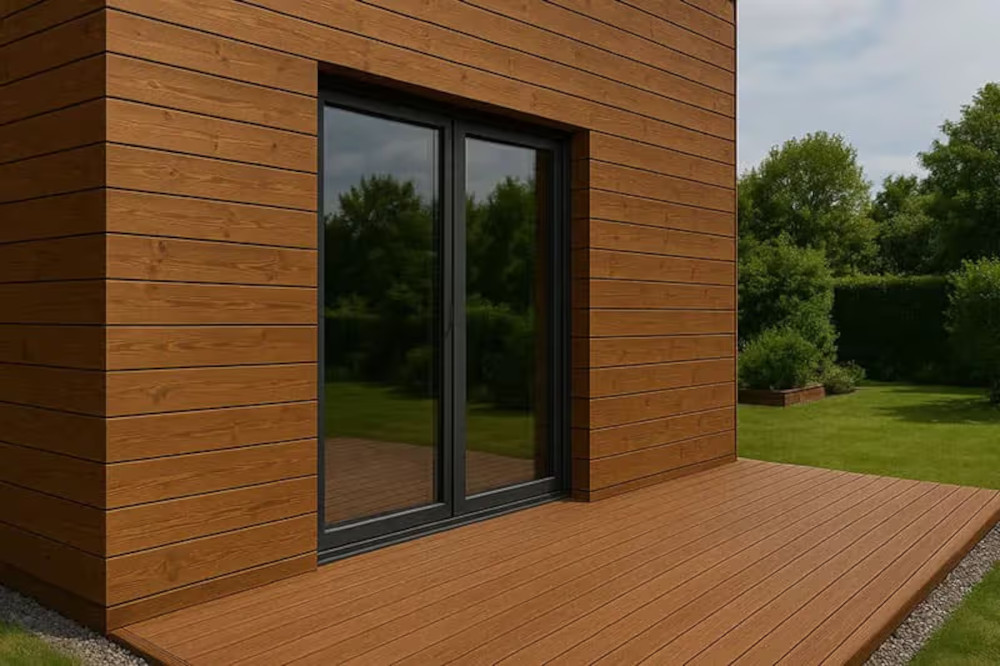
- Natural aesthetics - the wood gains an attractive darker tone that looks elegant and gives exterior spaces a modern appearance.
Thermowood vs. regular wood
When compared with regular wood, the differences become most noticeable during long-term exterior use. While untreated wood quickly loses its properties, thermowood maintains its stability even after many years. Thanks to this, it requires less maintenance and represents a more cost-effective investment in the long run.
Regular wood may be cheaper at the initial purchase, but the cost of regular impregnation, coatings, and replacement of damaged parts can increase maintenance expenses over time. Thermowood requires minimal care, making it an ideal solution for anyone looking for a practical and long-lasting material.